Ring vs. Nest which system is right for you in Ponte Vedra Beach

June 5, 2024

Nest vs. Ring: Which Smart Home Security System is Ideal for Ponte Vedra Beach Homeowners?


Introduction:


As technology continues to advance, homeowners are increasingly turning to smart home security systems to protect their properties and loved ones. Nest and Ring are two well-known names in the market, offering innovative features and robust security options. If you're a homeowner in Ponte Vedra Beach and considering a smart home security system, this blog post will compare Nest and Ring to help you make an informed decision.


  1. Climate Considerations:


Ponte Vedra Beach, located in Florida, experiences a warm and humid climate. This factor should be taken into account when choosing a smart home security system. Nest, with its extensive line of products, including thermostats, smoke detectors, and cameras, is designed to seamlessly integrate and provide enhanced climate control. This can be particularly beneficial for homeowners looking to monitor and control their indoor environment.


Ring, on the other hand, primarily focuses on security features and does not offer the same level of climate control integration as Nest. While both systems can provide notifications and remote access through smartphone apps, Nest's climate-focused features may be more appealing for Ponte Vedra Beach residents seeking comprehensive control over their home's climate.


  1. Camera Performance:


When it comes to surveillance cameras, both Nest and Ring offer high-quality options. Nest Cam Outdoor provides excellent video quality with 24/7 recording capabilities, while Ring Spotlight Cam captures clear footage and includes motion-activated LED lights. The choice between the two may depend on individual preferences and priorities.


Given Ponte Vedra Beach's coastal location, Nest's cameras with their weatherproof design and IP rating can withstand the elements effectively. With the ability to handle rain, heat, and humidity, Nest cameras can be a reliable choice for homeowners concerned about weather-related challenges.


  1. Integration and Compatibility:


Integration with other smart home devices is an important aspect to consider when choosing a smart home security system. Both Nest and Ring offer compatibility with various devices, allowing users to create a connected ecosystem.


Nest products, including cameras, thermostats, and doorbells, seamlessly integrate with other Nest devices, creating a unified smart home experience. Ring, on the other hand, has been expanding its compatibility and now integrates with numerous third-party devices such as smart locks and lighting systems. Homeowners in Ponte Vedra Beach should evaluate their existing smart home devices and choose a system that complements their ecosystem.


  1. Subscription Plans:


Both Nest and Ring offer optional subscription plans for enhanced features and storage. Nest Aware provides intelligent alerts, continuous recording, and advanced features, while Ring Protect offers professional monitoring, extended warranties, and cloud storage.


It's worth noting that subscription plans can significantly enhance the capabilities of these systems. Homeowners should consider their security needs and budget constraints when evaluating the value of the subscription plans offered by each company.


Conclusion:


Choosing between Nest and Ring can be a tough decision for Ponte Vedra Beach homeowners looking to invest in a smart home security system. While Nest offers climate control integration and robust camera performance, Ring focuses on security features and compatibility with third-party devices.


Ultimately, the choice depends on your specific needs, priorities, and existing smart home ecosystem. Consider factors like climate considerations, camera performance, integration, and subscription plans to determine which system aligns best with your requirements and offers the peace of mind you seek for your Ponte Vedra Beach home.
By Jamey Farrell January 8, 2026
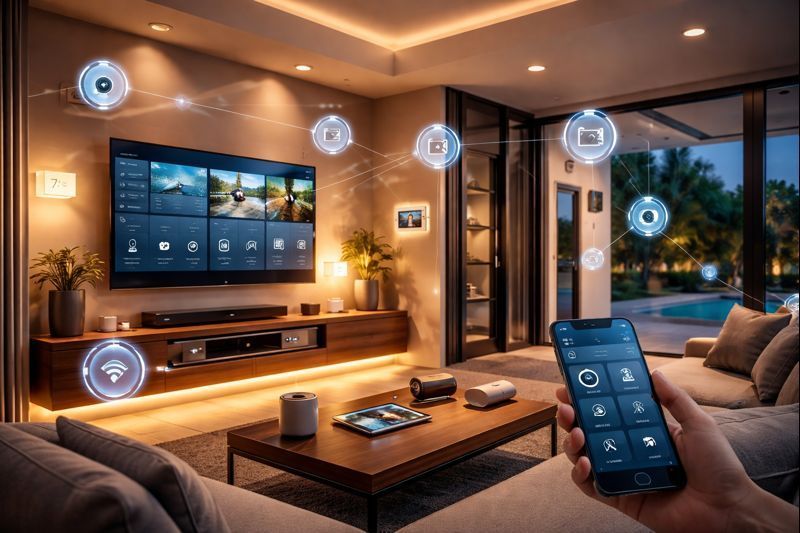
Taking Over a Smart Home Doesn’t Have to Be Overwhelming Every week, we meet homeowners who are stepping into a house with an existing smart home system—or who have decided it’s time to move on from their current AV provider. Almost always, the feeling is the same: overwhelmed. What should be exciting quickly turns into frustration. The system feels locked down. Logins are missing or controlled by someone else. Simple changes require phone calls, service tickets, or expensive upgrades that don’t seem very simple at all. At Wired Works, we specialize in AV and smart home takeovers—helping homeowners regain control of their technology, simplify what they have, and move forward with a system that’s reliable, flexible, and truly theirs. Here’s what that process looks like, and why it matters. What Is an AV Home Takeover? An AV home takeover happens when a homeowner buys a property with an existing smart system, decides to change AV companies, or inherits a system that’s outdated or difficult to manage. In many cases, these homes were built around proprietary platforms that require dealer-only software and ongoing dependence on a specific integrator. That often leaves homeowners without full access, visibility, or confidence in their own system. Our belief is simple: you should own your smart home—not feel owned by it. Our Approach: Simplify First, Then Make It Better We’ve found that the best smart homes aren’t built around a single locked ecosystem. They’re built from well-supported, best-in-class systems that are modular, app-driven, and easy to maintain over time. Instead of forcing everything into one closed platform, we typically break the home into individual systems—networking, audio, lighting, video, surveillance—each with its own excellent app and long-term support. From there, we use Josh.ai as a unifying layer that makes everything feel seamless without locking the homeowner in. This gives homeowners full access to their systems, clear ownership of credentials, flexibility to evolve, and a modern experience that actually feels intuitive. Step One: Understanding What’s Already There Every takeover starts with a full evaluation of the home. We walk the property, review the equipment, and take time to understand what’s working well, what’s outdated, and what’s limiting flexibility. This step isn’t about ripping everything out. It’s about clarity—so we can make thoughtful decisions about what’s worth keeping, what can be improved, and what’s holding the system back. Step Two: Identifying Lock-In and Limitations Many takeover homes include components that can only be serviced by authorized dealers or require special software to make even small changes. When we find those systems, we take the time to explain what they do, why they can be limiting, and what options exist moving forward. Our goal isn’t to criticize the original installation. It’s to help homeowners understand their choices so they can make confident, informed decisions. Step Three: Rebuilding With Proven, Widely Supported Solutions From there, we recommend platforms that are well-supported, widely adopted, and easy to live with long-term. These are systems with strong apps, active development, and flexibility for future growth. Just as important, we walk through the benefits and tradeoffs of each option so nothing feels rushed or sales-driven. The homeowner stays in control of the direction. Step Four: Starting With the Network (Always) Every smart home lives or dies by its network. That’s why we always start there. We design and refine the network to ensure it’s fast, stable, secure, and built to support everything else in the home. When the foundation is solid, the rest of the system simply works better—streaming is smoother, automation is more reliable, and service issues drop dramatically. Step Five: Building Around How You Actually Live Once the foundation is in place, we help homeowners prioritize what matters most to them—whether that’s music, TV, lighting, security, outdoor spaces, or automation. We don’t believe in forcing everything at once. Smart homes should grow intentionally, based on real-life use, not a checklist. Step Six: Bringing It All Together Once the individual systems are in place, we offer an optional layer that sits on top of everything and brings it all together. This allows your home to feel unified, with simple routines and personalized control. Behind the scenes, each system remains independent and easy to service—but to you, it feels like one smooth, cohesive smart home. Step Seven: Ownership, Training, and Long-Term Partnership This is where we truly separate ourselves. At the end of a takeover, homeowners have their logins, documentation, and apps fully set up. We make sure they understand how everything works and feel confident using it day to day. Our role isn’t to “hold the keys.” It’s to be a trusted long-term partner who’s there when needed—but never a gatekeeper. We offer several solutions for remote service and onsite service. Our goal is to be your AV team for life—the people you’re happy to see at your home and the ones you call when that itch for a bigger TV or better outdoor lighting kicks in. The End Result: Confidence and Control A successful AV home takeover leaves homeowners with technology they understand, systems they can trust, and the freedom to evolve over time. That’s how we believe smart homes should work—and that’s what we help our clients achieve every day.